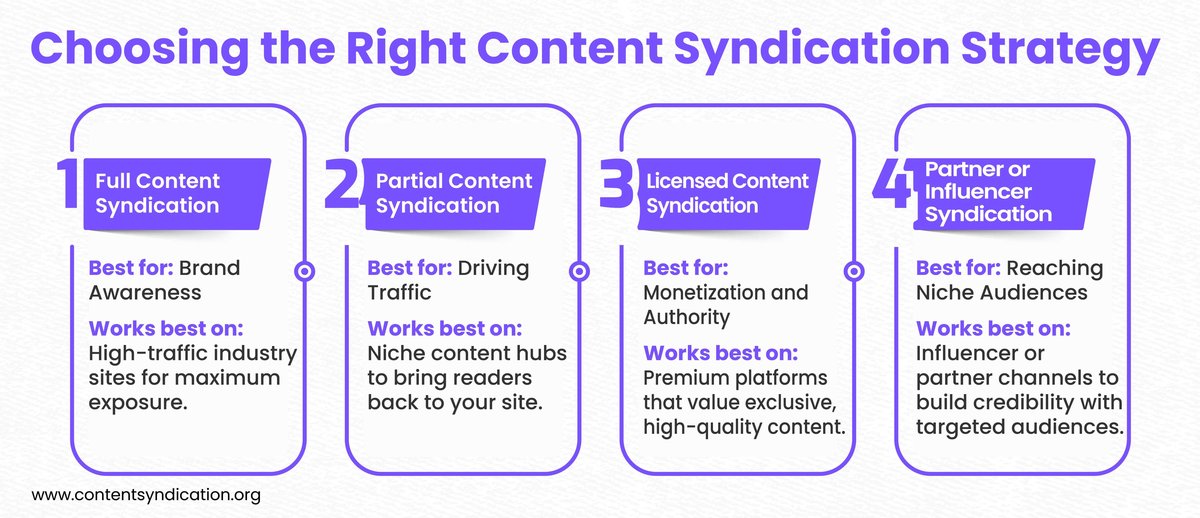
In the relentless race for attention online, simply creating great content often isn't enough. You could have a masterpiece of an article, a groundbreaking video, or an insightful infographic, but if it doesn't reach the right eyes (or ears), it's a missed opportunity. This is where the strategic power of Content Syndication & Repurposing comes into play. These aren't just buzzwords; they're essential gears in the engine of modern digital marketing, designed to maximize the impact of every piece of content you craft. But understanding when to syndicate, how to repurpose, and what's best for your unique brand can feel like navigating a maze.
Consider this your comprehensive map. We'll demystify these powerful strategies, show you how to leverage them effectively, and help you decide which path—or combination of paths—will drive the most value for your brand.
At a Glance: Your Quick Takeaways
- Content Syndication means spreading your original content across third-party platforms to reach new audiences in its existing form. Think guest posts or licensed articles.
- Content Repurposing involves transforming your existing content into new formats for different channels and purposes. Imagine turning a blog post into an infographic or video.
- Both strategies significantly expand your content's reach and boost ROI, but they serve different immediate goals.
- SEO is a key consideration: Syndication requires careful handling (canonical tags!) to avoid duplicate content penalties, while repurposing generally avoids this issue by creating new content formats.
- Resource allocation matters: Repurposing can be more resource-intensive due to design or production needs, whereas syndication primarily involves outreach and placement.
- Don't go it alone: Integrating both into a cohesive strategy, coupled with robust measurement, is the recipe for content mastery.
The Unending Demand for Content: Why You Can't Just Create and Forget
Every brand today is a publisher, constantly battling for mindshare. The problem? Consistently producing high-quality, new content is a monumental task, demanding time, resources, and endless creativity. Most marketing teams face a perpetual treadmill of content creation, often leading to burnout and diminishing returns.
But what if you didn't have to reinvent the wheel every single time? What if your best work could be given a second, third, or even fourth life, reaching entirely new audiences without starting from scratch? That's the promise of content syndication and repurposing. They're not shortcuts to shoddy content; they're smart, strategic plays to stretch your valuable assets further and achieve exponential reach.
Let's break down each strategy, uncovering its unique strengths, potential pitfalls, and how to wield it effectively.
Content Syndication: Amplifying Your Voice Far and Wide
Imagine having a brilliant speech, but only delivering it to your local town hall. Content syndication is like taking that same speech and having it broadcast on multiple news channels, podcast networks, and even quoted in major publications. It's about getting your original content in front of established audiences you wouldn't otherwise touch.
What Exactly Is Content Syndication?
At its core, content syndication is the practice of distributing your original content through third-party platforms, websites, or publications, always with your explicit consent as the owner. The key here is that the content typically remains in its original form. You're not changing it; you're simply allowing others to host or feature it.
Purpose: The primary goal is to significantly expand your reach. You leverage the existing audience and often the inherent legitimacy of external platforms to put your message in front of more people, ultimately driving awareness, traffic, and authority back to your brand.
Examples in Action:
- A tech company writes an in-depth analysis on AI trends for their blog, then licenses it to a prominent industry publication like Wired or TechCrunch.
- You pen an insightful opinion piece and submit it as a guest post to a high-authority blog in your niche.
- A B2B brand partners with a popular trade association to have their whitepapers featured prominently on the association's website.
- Think of how news articles often appear on multiple local news sites after originating from a national wire service.
Why Bother? The Unignorable Benefits of Syndication
The upsides of a well-executed syndication strategy are significant:
Expanded Reach: New Eyes, New Markets
This is the big one. By placing your content on external platforms, you gain access to their loyal, established audiences. This means reaching new demographics and markets that might never have found your original site. More eyes on your content directly translates to increased brand visibility, potential customer acquisition, and deeper engagement with your core messages. It's a powerful way to put your brand on the map for previously untapped segments.
Enhanced Credibility and Authority
Association is a potent tool. When reputable third-party platforms (think industry leaders, well-known news sites, or popular blogs) choose to feature your content, it lends a significant boost to your brand's trustworthiness and authority. It signals to your audience, and to search engines, that your content is valuable enough to be published elsewhere, effectively validating your expertise.
SEO Benefits (When Done Right)
Syndication can be a powerful driver of SEO, primarily through generating high-quality backlinks to your original content. These backlinks are like votes of confidence from other websites, signaling to search engines like Google that your content is authoritative and relevant. This can increase your website's domain authority and improve your search engine rankings, ultimately driving more organic traffic to your brand. Remember, better visibility leads to more opportunities to implement smart strategies to generate traffic.
Cost-Effectiveness: Maximizing Your Existing Investment
You've already invested time, money, and creative energy into producing your content. Syndication allows you to extend its shelf life and utility without incurring significant additional costs. It's about doing more with what you already have, improving your overall return on investment (ROI) for your content creation efforts.
Navigating the Treacherous Waters: Common Syndication Challenges
While the benefits are clear, syndication isn't without its hurdles. Smart marketers anticipate these and build mitigation strategies into their plans.
Duplicate Content Concerns
This is the elephant in the room. Search engines like Google strive to provide unique, valuable results. If identical content appears on multiple sites without proper attribution, search engines might struggle to identify the "original" source, potentially penalizing both the syndicated version and, in some cases, even your original content with lower rankings.
- Mitigation: This is crucial. Always work with your syndication partners to:
- Properly Credit the Original Source: Ensure a clear link back to your original article, indicating that your site is the canonical (preferred) version.
- Use Canonical Tags: The most effective technical solution. A canonical tag (
<link rel="canonical" href="[your original URL here]">) placed on the syndicated page tells search engines definitively where the original content lives, consolidating ranking signals to your site. - Other Directives: Sometimes, a "noindex" tag or a delayed publication (a few days after your original goes live) can also help manage search engine indexing.
Audience Saturation: Too Much of a Good Thing?
If your content appears too frequently or repetitively across too many platforms, especially to the same core audience, it can diminish its novelty and impact. Audiences might tire of seeing the same message, leading to decreased engagement and potentially turning them off your brand.
- Mitigation:
- Balance with Original Content: Ensure a healthy mix of syndicated pieces alongside fresh, unique content on your own channels.
- Tailor Messages (Slightly): While the core content remains the same, consider subtle adjustments to intros, calls-to-action, or examples to better resonate with the specific platform's audience. For instance, an article syndicated on LinkedIn might have a more professional framing than one on Buzzfeed.
- Vary Your Partners: Spread your syndication efforts across diverse platforms to reach different segments of your target audience rather than repeatedly hitting the same group.
Content Repurposing: Breathing New Life into Your Best Work
If syndication is about broadcasting your message further, repurposing is about transforming it. It's taking that same brilliant speech, turning it into a documentary, then distilling its key points into a series of social media memes, and finally adapting it into an interactive workshop. It's about maximizing the value of your core ideas by presenting them in myriad forms.
More Than Just a Facelift: What is Content Repurposing?
Content repurposing is the process of taking existing content and reformatting it into different formats or for various channels and purposes. It aims to truly transform content, allowing you to extract maximum value from your initial investment, rather than just reposting it.
Purpose: The goal is multifaceted: to rejuvenate content assets, cater to diverse audience preferences and consumption patterns, and expand reach by meeting your audience where and how they prefer to consume information.
Examples in Action:
- A lengthy, in-depth blog post explaining "5 Steps to [Achieve X]" could become:
- A video tutorial series on YouTube.
- An engaging infographic for Pinterest or a presentation slide deck.
- A podcast episode where you discuss the steps with a guest expert.
- A series of short, punchy social media snippets (e.g., Twitter threads, Instagram carousels) highlighting each step.
- An email course delivered over five days.
- A comprehensive whitepaper might be distilled into a concise executive summary, an on-demand webinar, or a series of data visualizations.
- A successful webinar could be transcribed into a blog post, edited into short video clips for social media, or even form the basis of a new ebook.
The Power of Reinvention: Core Benefits of Repurposing
Repurposing is a testament to working smarter, not harder. Its benefits extend across efficiency, engagement, and brand building.
Maximized ROI: Extending Your Content's Lifespan
Why let great content fade away after its initial publication? Repurposing extends the lifespan and market reach of your content assets. By transforming existing resources (your already-created content) into new forms, you make better use of your initial investment in time, cost, and effort compared to constantly creating entirely new pieces. It's an engine for content longevity.
Diverse Audience Engagement: Reaching Everyone, Everywhere
People consume information differently. Some prefer to read, others to watch, listen, or interact. Repurposing allows you to address these varied preferences by repackaging content into formats like videos, infographics, podcasts, and social media posts. This multi-format approach drastically increases engagement across different channels, ensuring your message resonates with a broader segment of your target audience.
Improved Brand Consistency: Reinforcing Your Message
By adapting your core content and messaging across various formats and platforms, you reinforce your brand identity. This consistent exposure to your voice, values, and key messages strengthens brand recognition, builds trust, and positions your brand as a reliable source of information. It ensures your narrative remains coherent, no matter where your audience encounters it.
Enhanced Discoverability: More Paths to Your Expertise
Every new format or channel you use for repurposed content creates another entry point for discovery. A video might be found on YouTube, an infographic on Pinterest, a podcast on Spotify. This increases content findability and participation across various mediums, attracting new audiences and driving traffic back to your core content or your main website.
Mind the Hurdles: Repurposing Roadblocks
While powerful, repurposing isn't a magic bullet. It requires careful planning and execution.
Resource Intensiveness: It Takes Work!
Transforming content isn isn't always quick. It requires time, effort, and often specialized expertise. Turning a blog post into an animated video, for example, demands video editing skills, graphic design prowess, and potentially scriptwriting adjustments. Similarly, podcasts require audio production, and intricate infographics need data visualization skills. Without proper planning and budget, these efforts can be costly.
- Mitigation:
- Start Small: Choose high-performing content and simple repurposing projects first (e.g., blog to social media snippets).
- Leverage Existing Skills: Identify skills within your team, or outsource strategically.
- Batch Process: Create multiple repurposed pieces from one core asset in one go to streamline workflows.
Maintaining Quality: Not Just a Simple Copy-Paste
Repurposed content must still be engaging, relevant, and provide fresh perspectives or added value. Simply copying and pasting text onto an image isn't repurposing; it's laziness. Each new format should feel purpose-built for its medium and audience.
- Mitigation:
- Add Value in Each Format: Consider what unique value each new format brings. A video can show emotion; an infographic visualizes data; a podcast offers conversational depth.
- Edit for Medium: Don't just copy. Edit and adapt the content for the specific style and constraints of the new format (e.g., concise for social, visual for infographics).
Audience Overlap: Avoiding Repetitive Exposure
Similar to syndication, there's a risk of annoying your audience if they constantly see the exact same core message presented in slightly different wraps across all your channels. Repetitive exposure for the same audience can reduce novelty and impact.
- Mitigation:
- Customize for Segments: Tailor repurposed content for each segment's preferences. For example, a LinkedIn audience might appreciate a detailed data visualization, while a Twitter audience might prefer a quick, thought-provoking quote.
- Vary Channels and Timing: Don't blast all repurposed versions of one piece of content at the same time across all channels. Stagger their release and choose channels based on audience demographics.
Content Syndication vs. Repurposing: A Brand's Strategic Playbook
So, which one is right for you? The truth is, they're not mutually exclusive; they're complementary. The decision often comes down to your immediate goals, available resources, and the nature of the content itself.
When to Leverage Each Strategy
Both syndication and repurposing shine in particular scenarios:
- Your content has high views but low conversion rates: If an article is popular but not driving the desired actions, repurposing it into a more actionable format (like a video tutorial or an interactive guide) might engage users more effectively. Syndicating it to a new, broader audience might also expose it to those more likely to convert.
- There's room for quality improvement or further research: Perhaps an older piece of content is still relevant but could benefit from updated data, new insights, or a fresh perspective. This is a perfect candidate for repurposing and refreshing. Then, with the improved version, you might consider syndicating it.
- The goal is to reach new audiences:
- Syndication is a direct route to established external audiences. You immediately tap into their trust and readership.
- Repurposing for platforms like YouTube, Pinterest, or niche podcasts can organically attract new audiences who prefer those specific formats, increasing discoverability.
- The content is not highly time-sensitive: Evergreen content that remains relevant over long periods is ideal for both strategies. It means your syndicated piece won't quickly become outdated, and your repurposed assets will continue to provide value for months or years.
When to Hit the Brakes (Or Proceed with Caution)
There are times when one or both strategies might not be the best fit:
- Directly selling a product/service: While both strategies can lead to sales, content that is solely designed to directly sell a product or service might not be ideal for syndication. Third-party platforms prefer valuable, informative content, not overt ads. Similarly, direct repurposing of a sales page might dilute specific benefits or come across as overly promotional across different channels. Focus on value-driven content, and let the sales follow.
- Solely building initial brand recognition (with nuance): If your brand is brand new and unknown, your priority might be to establish a clear, consistent identity on your own platforms first. Syndication, if not clearly attributed or if involving multiple authors, could potentially lead to identity confusion early on.
- Nuance for Repurposing: However, repurposing can be incredibly effective here if old content is refreshed with new information or adapted with different phrasing. It allows a new brand to quickly populate multiple channels with high-quality content derived from a core message, reinforcing their identity.
Resource Allocation: Where to Start
If time or resources are limited (and when aren't they?), prioritize wisely:
- Solidify Core Content: Before thinking about extensive syndication or repurposing, ensure you have a strong foundation of high-quality, original content on your owned channels. This is your home base.
- Identify Your Best Performers: Look at your analytics. Which articles, videos, or guides get the most traffic, engagement, or social shares? These are your prime candidates for both syndication and repurposing. Don't waste effort on underperforming content.
- Choose Strategically:
- Need rapid audience expansion and authority? Look at syndication partnerships.
- Want to cater to diverse preferences and get more mileage from existing assets? Lean into repurposing.
- Often, the best strategy is to take your absolute best core content, repurpose it into 2-3 new formats, and then consider syndicating one of those formats or the original piece to a high-value partner.
Harmonizing Your Efforts: Integrating Syndication and Repurposing
The most powerful content strategies don't treat syndication and repurposing as isolated tactics. Instead, they integrate both into a cohesive content plan.
Building a Cohesive Content Ecosystem
Think of your content as a living organism. Your original content is the heart. Repurposing creates the limbs that reach out in different directions, adapting to various environments. Syndication is the circulatory system, carrying your vital messages to every part of the network.
- Strategic Planning: Begin with your overarching content strategy. What are your key messages? Who are your target audiences? Which channels do they frequent? This will inform what content to create, what to repurpose, and where to syndicate.
- Consistent Messaging & Branding: Ensure that whether your audience encounters your content as a podcast, an infographic, or a syndicated article on Buzzfeed, the core message and brand identity remain consistent. This builds trust and strengthens your brand's presence.
- Workflow Integration: Build processes that incorporate both. When you plan a new pillar article, also plan its potential repurposed formats and syndication targets. This proactive approach saves time and ensures maximum utilization.
Measuring Success: The Metrics That Matter
You can't improve what you don't measure. For both syndication and repurposing, tracking key performance indicators (KPIs) is essential to assess effectiveness and make iterative improvements.
- Engagement Metrics:
- Syndication: Clicks on syndicated links, comments, social shares of syndicated content.
- Repurposing: Views (video), listens (podcast), shares, likes, comments, time spent consuming the repurposed format.
- Traffic Metrics:
- Syndication: Referral traffic from syndication partners to your website, direct traffic attributed to increased brand awareness.
- Repurposing: Traffic driven from new channels (e.g., YouTube, Pinterest, Twitter) to your main content or website.
- Conversion Metrics:
- Syndication & Repurposing: Lead generation (form submissions, downloads), email sign-ups, demo requests, sales, or any other desired call-to-action completion originating from the syndicated or repurposed content.
- SEO Metrics:
- Syndication: New backlinks acquired, improvements in keyword rankings for your original content, increased domain authority.
- Repurposing: Increased organic visibility for repurposed content on platforms like YouTube (video SEO).
By regularly analyzing these metrics, you can identify which content pieces and which strategies are delivering the best results, allowing you to refine your approach and allocate resources more effectively for future campaigns.
Common Questions & Misconceptions
Let's tackle some lingering doubts you might have.
"Is syndication just copying? Won't that hurt my SEO?"
No, not if done correctly. Syndication is a legitimate content distribution strategy, not plagiarism. The key is proper attribution and, crucially, the use of canonical tags. When a canonical tag points back to your original article, search engines understand that your site is the primary source, and the syndicated version is simply a redistribution. This consolidates SEO value to your site, preventing duplicate content penalties and instead leveraging the syndication for backlinks and expanded reach.
"Will repurposing make my content stale or repetitive?"
Not if you do it right! The goal of repurposing isn't to just re-skin content, but to adapt it creatively for new contexts and audiences. If you simply copy-paste, then yes, it will feel stale. But by transforming a blog post into an interactive quiz, a video series, or a data-rich infographic, you're offering a fresh, valuable experience. The key is to add value in the new format and consider the unique consumption habits of the platform.
"Do I need a massive team and huge budget for this?"
While high-end video production or intricate infographics can be resource-intensive, you don't need a massive team to start. Begin small. You can repurpose a blog post into a series of Twitter threads, pull out key quotes for Instagram graphics, or turn an article into a simple podcast script you record yourself. The focus should be on maximizing your existing content, not necessarily creating Hollywood-level productions from day one. Start with your best content and the simplest repurposing opportunities, then scale up as you see results and gain resources.
Your Next Step: Charting a Course for Content Mastery
Content syndication and repurposing are not just tactics; they are strategic pillars for any brand serious about maximizing its digital footprint. They offer a powerful antidote to the endless content creation cycle, transforming your content investment into sustained, far-reaching impact.
Your journey to content mastery begins with a simple audit:
- Identify Your Top Performers: Look at your analytics. Which pieces of content are truly excelling? These are your goldmines.
- Define Your Goals: Do you need more brand awareness? Better engagement? More leads? Your goals will dictate whether syndication or repurposing (or both) is the immediate priority.
- Map Out Opportunities: Brainstorm how your top-performing content could be repackaged for new formats or placed on external platforms.
- Start Small, Learn, and Scale: Don't try to do everything at once. Pick one or two promising ideas, execute them, measure the results, and refine your approach.
By embracing these strategies, you're not just creating content; you're building a dynamic, omnipresent content ecosystem that consistently delivers value, expands your reach, and fortifies your brand's authority in the digital landscape. It's time to make your best content work harder for you.