Imagine a constant stream of visitors discovering your website, not because you paid for their clicks, but because your content genuinely answered their questions and solved their problems. This isn't wishful thinking; it's the power of organic search traffic generation. It’s the lifeblood of sustainable online growth, delivering visitors who are actively seeking what you offer, turning casual browsers into loyal customers, and establishing your brand as a trusted authority.
This comprehensive guide will demystify the process, turning complex SEO into actionable steps you can implement today to cultivate a robust and reliable source of website visitors.
At a Glance: What You’ll Learn
- Why organic traffic matters: Understand its cost-effectiveness, targeted nature, and long-term value compared to paid ads.
- The trade-offs: Acknowledge the investments and time required for sustainable growth.
- Step-by-step strategy: Dive into the six critical actions you need to take, from technical fixes to building backlinks.
- Practical tools and tactics: Get specific advice on leveraging platforms like Google Search Console, Semrush, and Google Analytics 4.
- How to monitor success: Learn to track your progress and understand what’s working.
The Undeniable Power of Organic Traffic: Why It’s Worth the Investment
Organic traffic refers to those invaluable visits to your website that originate from unpaid search results. Think of it as free discovery – people typing a query into Google, Bing, or another search engine, and landing on your site because it genuinely provides the best answer. While it’s "free" in the sense that you're not paying per click, it certainly requires an investment of time, effort, and strategic planning. The dividends, however, are immense.
Why Choose the Organic Route?
- Remarkable Cost-Effectiveness: Unlike paid advertising, where every click comes with a price tag, organic traffic doesn't incur per-click costs. While you invest in content creation and SEO, the long-term ROI is staggering. Semrush, for instance, estimated that replicating eBay's August 2024 organic traffic with paid ads would cost an astronomical $23.2 million. That's the power of owned audience acquisition.
- Precision Targeting: Organic traffic isn't just traffic; it's highly targeted traffic. Visitors arriving from search engines are actively looking for solutions, information, products, or services related to your niche. They have clear intent, making them far more likely to convert into leads or sales.
- Cultivating Relationships & Authority: When users consistently find valuable answers on your site, it builds trust and engagement. You're not just a vendor; you become a go-to resource. Consistent high rankings also establish your site as an industry leader, reinforcing critical E-E-A-T (Experience, Expertise, Authoritativeness, and Trustworthiness) signals with both users and search engines.
- Sustainable, Compounding Growth: Organic traffic isn't a faucet you turn on and off. Once you've earned your rankings, they can provide a steady, compounding stream of visitors over time, building a robust lead pipeline without continuous ad spend. It’s a flywheel effect – good content leads to traffic, which leads to authority, which leads to more traffic.
- Scalability for the Long Haul: As your business grows, your organic reach can expand with it. A well-executed SEO and content marketing strategy allows you to systematically increase your visibility across a broader range of keywords and topics.
Organic vs. Paid: A Quick Comparison
Think of organic traffic as building a house brick by brick – it takes time and effort, but you own the structure and it stands strong for years. Paid traffic is like renting an apartment – you get immediate access and can move in quickly, but the moment you stop paying, you're out.
| Feature | Organic Traffic | Paid Traffic (PPC) |
|---|---|---|
| Cost Model | Investment in content/SEO; no per-click costs | Per-click costs; continuous budget required |
| Speed of Results | Slow growth (4-6 months+); compounding over time | Almost immediate results |
| Targeting | Attracts searchers with clear intent for specific queries | Highly specific targeting (demographics, location, behavior) |
| Sustainability | Long-term, compounding value; traffic can persist | Stops when payments cease; short-term gains |
| Brand Building | Builds authority, trust, and brand recognition over time | Primarily for direct conversions; less emphasis on authority |
| Risk | Algorithm dependency | Budget dependency, competitive costs |
The Reality Check: Downsides and Considerations
While the benefits are compelling, it’s crucial to enter the world of organic traffic with open eyes.
- Ongoing Investment is Key: "Free" traffic isn't truly free. To maintain and grow your search engine visibility, you need continuous investment in SEO, content creation, technical maintenance, and strategy refinement. Think of it as maintaining your valuable asset.
- Patience is a Virtue (and a Necessity): Significant organic traffic growth is a marathon, not a sprint. It typically takes time—often four to six months or even more—to see substantial results. Consistency is paramount during this period.
- The Algorithm Dance: Your organic performance is intrinsically linked to search engine algorithms, which change frequently. These updates can impact your traffic, sometimes dramatically, emphasizing the need for adaptable strategies and staying updated with SEO best practices.
- Don't Put All Your Eggs in One Basket: Relying solely on organic traffic can be risky. A diversified traffic strategy that includes social media marketing, email marketing, and even a strategic use of paid advertising creates a more resilient online presence.
The Foundational Pillars: How to Generate Organic Search Traffic
Now that you understand the "why," let's get into the "how." Generating organic search traffic is a systematic process built on several interconnected pillars. Skip any one of these, and your foundation might crack.
1. Fix Technical Issues: Paving the Way for Google
Before you even think about content, you need to ensure Google and other search engines can actually find, crawl, and index your website effectively. Imagine having the best content in the world, but Google's bots can't even get through your front door. That’s a technical SEO problem.
Your Action Plan:
- Become Best Friends with Google Search Console (GSC): This is your direct line to Google. Regularly check the "Indexing > Pages" report. Are important pages listed as "Not indexed"? Differentiate between intentionally excluded pages (like old policy documents) and those that should be indexed but aren't. Address issues like redirect errors, accidental
noindextags, or server issues. - Optimize for User Experience (Core Web Vitals): Google prioritizes websites that offer a great user experience. Core Web Vitals (CWV) are a set of metrics measuring loading performance, interactivity, and visual stability. Check your CWV report in GSC. If your scores are poor, investigate opportunities to optimize page speed, such as resizing large images, deferring render-blocking JavaScript, or improving server response times. A fast, stable site keeps visitors happy and encourages them to stay longer.
- Perform a Comprehensive Site Audit: Tools like Semrush's Site Audit can be invaluable here. They identify a wide range of technical SEO issues, including crawlability problems, internal linking errors, performance bottlenecks, and site structure issues. Prioritize resolving "Errors" first – these are often critical issues like duplicate content, broken links, or problematic HTTP status codes that can severely hinder your organic visibility.
2. Find Keywords to Drive Your SEO Strategy
Keywords are the bridge between what people search for and the content you create. Identifying the right keywords isn't about guessing; it's about strategic research to uncover valuable queries that people use when looking for information related to your niche.
Your Action Plan:
- Start with "Easy Wins": Especially if you're a new or smaller site, targeting highly competitive keywords initially can be disheartening. Instead, aim for lower-difficulty terms that are easier to rank for. These "long-tail" keywords (longer, more specific phrases) often have lower search volume but higher conversion intent.
- Unleash the Power of Keyword Research Tools:
- Semrush's Keyword Magic Tool: This is a powerhouse. Enter a broad "seed keyword" related to your business (e.g., "vegan recipes" or "home office setup"). Then, filter by Search Volume (you want enough people searching for it) and, crucially, Keyword Difficulty (KD). Look for terms with a KD of 0-49, categorized as "easy" or "possible" to rank for. You can also filter by search intent (informational, commercial, transactional) to align with your content goals. The tool’s AI-powered feature can even provide a personalized difficulty score based on your domain's authority.
- Semrush's Keyword Gap Tool: Want to know what your competitors are ranking for that you're missing? This tool is fantastic. Enter your domain and up to four competitors. The "Missing" filter shows keywords where your competitors rank in the top 100, but you don't. The "Weak" filter reveals keywords where your competitors rank higher than you. This intel is pure gold for content strategy.
3. Create & Optimize Search Intent-Focused Content
Content is king, but only if it serves the user's intent. Producing high-quality content that truly satisfies user needs is how you earn rankings, drive traffic, and establish your authority. This means understanding why someone is searching for a particular keyword. Are they looking for information, a product review, or ready to buy?
Your Action Plan:
- Breathe New Life into Existing Content: You might already have valuable assets gathering dust.
- Identify Underperformers: Head back to GSC's "Search results" report and look for pages with a decent number of impressions but a low Click-Through Rate (CTR) – say, under 3%. These pages are appearing in search, but people aren't clicking. They're ripe for a refresh.
- Competitor Analysis (Deep Dive): For these underperforming pages (or any new content you're planning), analyze the top-ranking competitors for your target keywords. What kind of content are they publishing? What is the search intent they address? What visuals do they use? How deep is their content? Is their information updated? Pay attention to their metadata, headings (H2s/H3s), and the apparent expertise of their writers.
- Refine with On-Page SEO Tools: Tools like Semrush's On Page SEO Checker offer specific, actionable suggestions for improving existing content, covering aspects like readability, optimal meta descriptions, and keyword usage.
- Craft New, Evergreen Content: Focus on topics that solve timeless problems and maintain consistent search volume over time. "How-to guides" are often excellent examples (e.g., "how to cook quinoa," "how to tie a tie").
- Comprehensive Coverage: Your goal should be to create content that answers every possible question a reader might have about that topic. Include basics, step-by-step instructions, practical tips, multiple methods, and strategic internal links to related content.
- Topic Discovery: Use tools like Google Trends to spot rising interest areas and Google Autocomplete (the suggestions that pop up as you type in the search bar) or "People Also Ask" boxes for related questions and sub-topics.
- Real-Time Optimization: Utilize Semrush's SEO Writing Assistant. It integrates with Google Docs and WordPress to provide real-time suggestions on SEO, tone of voice, readability, and originality as you write, ensuring your new content is optimized from the ground up.
4. Add Internal Links: Connecting the Dots
Internal links are hyperlinks that connect one page on your website to another page on the same website. They are critical for both users and search engines. For users, they provide a natural path to related information, keeping them engaged longer. For search engines, they help discover, crawl, and understand the context and hierarchy of your content.
Your Action Plan:
- Hunt Down Orphan Pages: Use site audit tools (like Semrush's Site Audit or plugins like RankMath) to identify "orphan pages"—pages that have no internal links pointing to them. These pages are often difficult for search engines to find and can struggle to rank. Systematically add relevant internal links to these pages from higher-authority, related content.
- Context and Anchor Text Matter: Don't just link for the sake of it. Ensure internal links match the context of the surrounding content and use descriptive anchor text (the clickable text of the link). Instead of generic phrases like "click here" or "read more," use keyword-rich, descriptive text that tells both users and search engines what the linked page is about. For example, linking "best practices for SEO audits" is far more effective than "click here."
- Pro Tip for New Content: When publishing a new article, dedicate 5-10 minutes to going back to 2-3 older, relevant articles on your site and adding new internal links from them to your fresh content. This helps search engines discover your new page faster and passes on valuable link equity.
- Optimize Link Flow and Structure:
- Prioritize Link Equity: Direct internal links from your highest-authority pages to newer or lower-performing content that you want to boost.
- Topic Clusters: Organize your content into "topic clusters" where a central "pillar page" comprehensively covers a broad topic, and multiple "cluster content" pages delve into specific sub-topics, all interlinked. This structure signals semantic relationships to search engines and improves user navigation. For more on creating effective connections, consider how you might Generate more website traffic by structuring your site content thoughtfully.
- Avoid Overlinking: While internal links are good, excessive links on a single page can dilute their value and overwhelm users. Aim for relevance and utility.
5. Build a Backlink Strategy: Earning Your Authority Stripes
Backlinks (or "inbound links") are links from other reputable websites pointing to your site. Think of them as votes of confidence. When high-authority sites link to yours, it signals to search engines that your content is valuable, trustworthy, and authoritative, directly impacting your rankings and organic traffic. This is one of the strongest ranking signals.
Your Action Plan:
- Create Link-Worthy Content (The Foundation): You can't earn backlinks if you don't have something worth linking to. Consistently publish high-value, "linkable assets" such as:
- Original research, studies, or unique data.
- Comprehensive how-to guides or tutorials.
- Free tools, templates, or resources.
- Expert roundups or interviews.
- Infographics or other attractive, shareable visuals.
- Implement Dedicated Link Building Tactics:
- Broken Link Building: Find broken links on other websites in your niche. Reach out to the site owner, inform them of the broken link, and suggest your relevant content as a replacement.
- The Skyscraper Technique: Find popular content in your niche that has many backlinks. Create an even better, more comprehensive, and up-to-date version of that content on your site. Then, reach out to sites that linked to the original, inferior content and suggest they link to your superior version.
- Competitor Backlink Analysis: Use tools like Semrush's Backlink Gap tool to see which websites are linking to your competitors but not to you. This gives you a list of ideal prospects for outreach. Analyze their backlinks to identify patterns – what kind of content do they link to? This informs your own content creation and outreach strategy.
- Foster Genuine Industry Relationships: Building relationships with other experts, influencers, and webmasters in your niche can naturally lead to backlinks. Participate in relevant online communities (Slack groups, Facebook groups, Reddit), add value to discussions, and only include links to your content when it's genuinely relevant and helpful to the conversation. Authenticity is key here.
- Manage Your Outreach: Semrush's Link Building Tool can help streamline this process. It generates a list of potential linking prospects and provides features to manage your outreach campaigns, track progress, and organize communications.
6. Set Up Your Google Business Profile (If Applicable): Local Search Domination
If your business has a physical location (e.g., a retail store, restaurant) or serves a specific geographic area (e.g., a plumber, consultant), optimizing for local SEO is non-negotiable. Your Google Business Profile (GBP) is the cornerstone of local search visibility.
Your Action Plan:
- Claim and Fully Optimize Your Free GBP: This is a powerful, free tool. Create and verify your profile, then populate it with as much relevant, accurate information as possible.
- Accurate NAP: Ensure your Name, Address, and Phone number (NAP) are consistent across your GBP and all other online directories.
- Detailed Business Information: Fill out your business hours, categories, services, products, accessibility features, and accepted payment methods.
- High-Quality Photos: Upload compelling images of your business, products, and team.
- Encourage Reviews: Actively solicit positive reviews from satisfied customers. Respond to all reviews, positive or negative, professionally.
- Regular Posts: Use the GBP "Posts" feature to share updates, offers, events, or new content.
- Q&A Section: Monitor and answer questions posed by users in your GBP’s Q&A section.
A fully optimized GBP maximizes your visibility in the "local pack" (the map-based results at the top of local searches) and on Google Maps, driving more direct visits and calls, which often lead to website traffic and conversions.
Keeping Tabs: How to Monitor Your Organic Traffic
You've put in the hard work – now it's time to see the results. Monitoring your organic traffic helps you understand what's working, identify areas for improvement, and justify your ongoing SEO efforts.
- Semrush Organic Research Tool: This tool gives you a high-level overview of your organic performance and that of your competitors.
- Enter your domain to see estimated monthly organic traffic, the number of keywords you rank for, and historical traffic trends.
- The "Positions" tab lists all the keywords your site ranks for. You can filter this by Position (e.g., top 3, top 10), Search Volume, Intent, and even discover which SERP Features (like featured snippets or image packs) you appear in.
- The "Position Changes" report is excellent for spotting recent ranking gains or drops, allowing you to quickly investigate the causes.
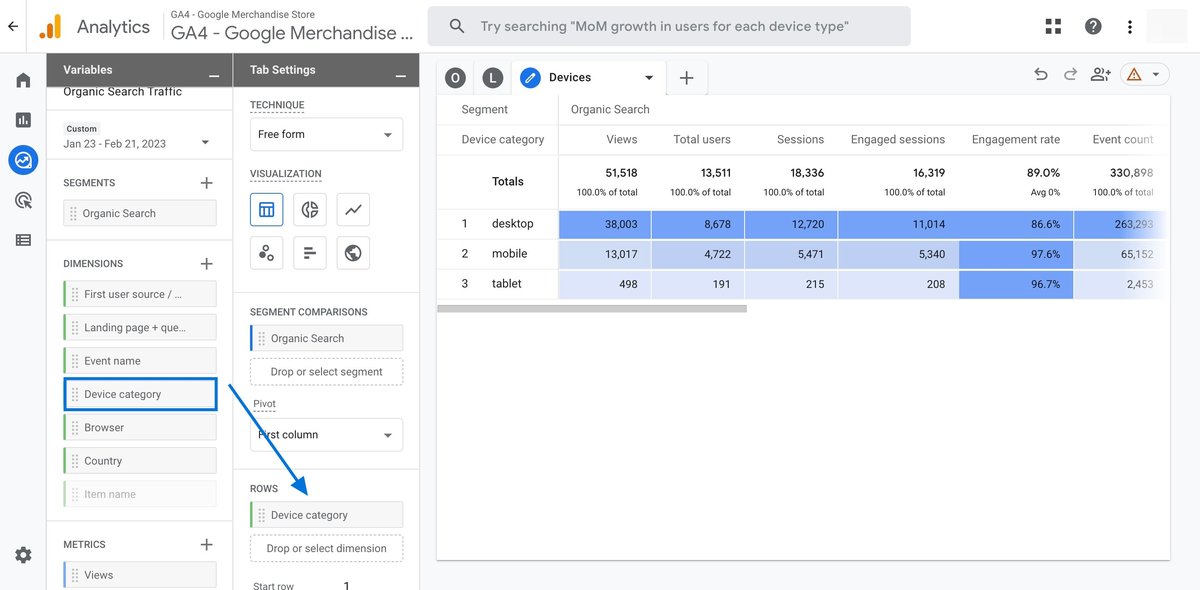
- Google Analytics 4 (GA4): GA4 is Google's analytics platform, offering deep insights into user behavior.
- To see overall organic traffic, navigate to "Reports" > "Life cycle" > "Acquisition" > "Traffic acquisition." Here, you'll find a breakdown of all traffic sources, with "Organic Search" clearly identified.
- To pinpoint specific search engines driving traffic, add "Session source" as a secondary dimension.
- For page-level organic insights, go to "Engagement" > "Pages and Screens" and add "Session source / medium" as a secondary dimension. This helps you understand which specific content pieces are attracting organic visitors.
- Google Search Console (GSC): GSC provides the most accurate data directly from Google about how your site performs in search.
- Open the "Search results" report under "Performance." This report shows the total number of organic clicks from Google's search results, your average CTR, and average position.
- You can then drill down to see which top queries, pages, and countries are driving this traffic. This is invaluable for identifying high-performing keywords, understanding user intent, and spotting content opportunities.
Regularly reviewing these tools (weekly or monthly, depending on your activity) will give you a clear picture of your organic traffic trajectory and empower you to make data-driven decisions.
Beyond the Basics: Sustaining Your Organic Growth
Generating organic search traffic isn't a one-and-done project; it's an ongoing journey of optimization, adaptation, and continuous improvement. The digital landscape is always shifting, and staying ahead requires a commitment to consistency.
Think of your website as a garden. You've prepared the soil (technical SEO), planted seeds (keyword research), watered them diligently (content creation), and nurtured their growth (internal linking and backlinks). To keep your garden flourishing, you must continue to weed (fix new technical issues), fertilize (update and refresh content), and protect it from pests (adapt to algorithm changes).
Your next steps should include:
- Routine Content Audits: Regularly review your existing content for accuracy, freshness, and comprehensiveness. What needs updating? Can older pieces be combined or expanded?
- Staying Ahead of Algorithm Updates: Keep an eye on industry news and Google's announcements. Understand how major algorithm changes might impact your site and adjust your strategy accordingly.
- Monitoring Competitors: Your competitors aren't static. Continually analyze their organic strategies, new content, and backlink profiles to identify new opportunities and threats.
- Exploring New Content Formats: Don't limit yourself to blog posts. Experiment with video, podcasts, interactive tools, or infographics to attract diverse audiences and capture different search features.
- Prioritizing User Experience: Google's ultimate goal is to serve users the best possible results. A website that is fast, mobile-friendly, easy to navigate, and provides a truly valuable experience will always be favored.
By embracing these principles, you won't just generate organic search traffic; you'll build a resilient, authoritative, and growing online presence that consistently delivers valuable visitors, leads, and customers for years to come. The effort is significant, but the rewards are truly transformative for your sustainable website growth.